
Round, oval, pear. Which feels like you?
Get to know the outlines before you get lost in the details.
Begin with the outline
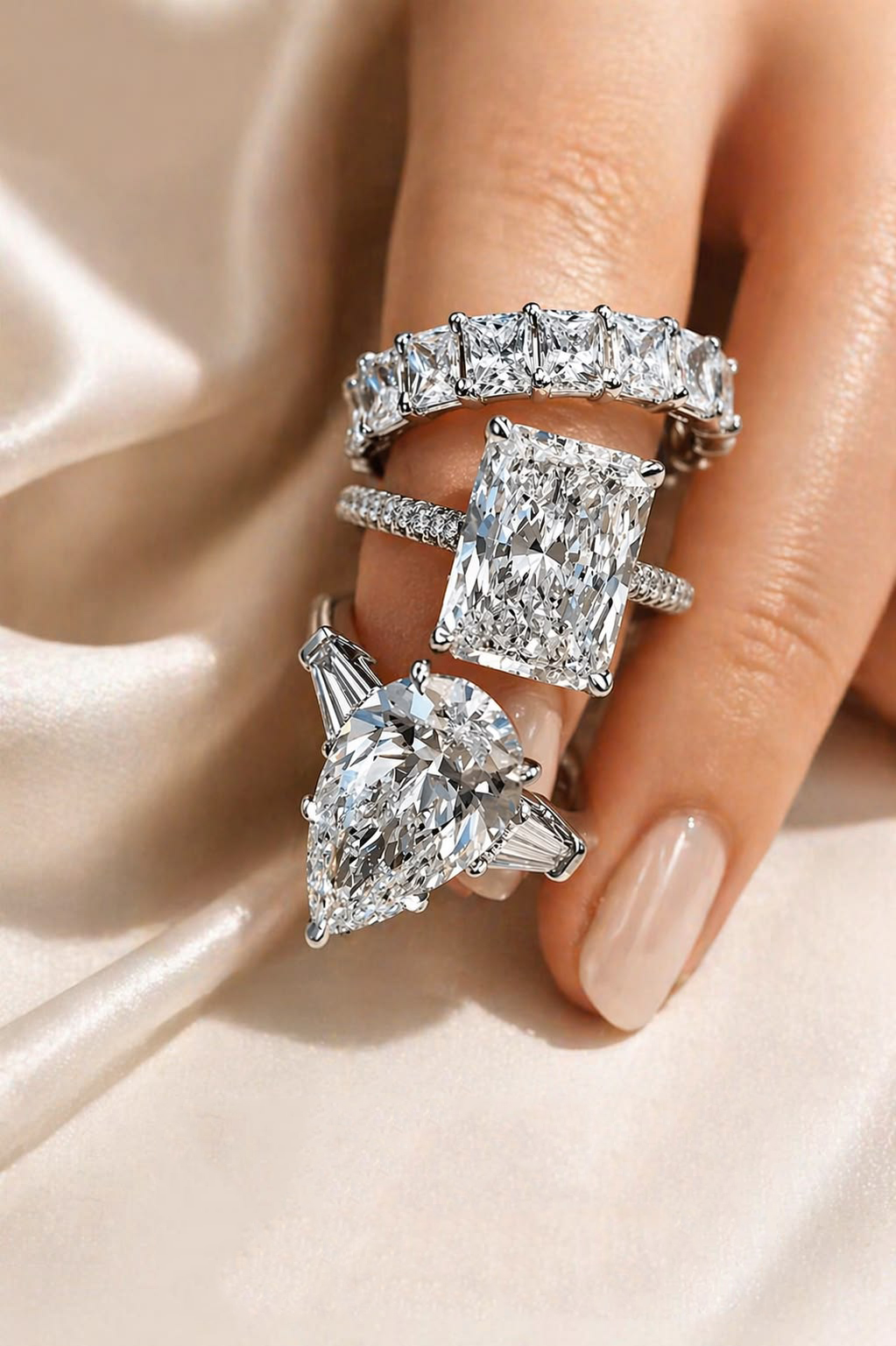
A diamond’s shape describes its outline. Round, oval, pear and emerald-cut silhouettes each give a ring a different character. Cut quality is a separate consideration, so a favourite shape is a starting point rather than the whole decision.
Look through a few designs without comparing sizes or prices first. Notice which shapes you return to. Save two or three examples, including the settings around them.
See it in a setting
A round outline is balanced and symmetrical; an oval is elongated, while a pear brings together a rounded end and a point. Rectangular step-cut styles, such as the emerald cut, have a more geometric appearance.
Compare complete rings as well as loose stones. The band, orientation and setting are all part of what you see. Try a simple design alongside something more detailed to work out which part is drawing your attention.
Give yourself time to look
When possible, look at a diamond from several angles and in different lighting. Ask a jeweller to explain its grading report and the details you are noticing.
Bring your shortlist to a design conversation. “I like this shape, but a slimmer band” is a useful place to begin. There is no need to arrive with every detail decided.